The Raised Hood: A Field Guide to Wearing It Well in Britain

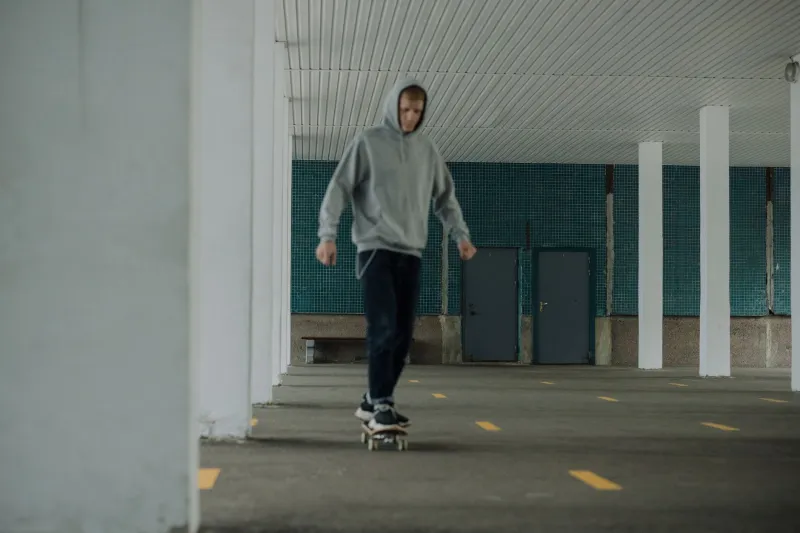
Photo: Alex Micheu Photography from VILLACH, Austria, CC BY-SA 2.0, via Wikimedia Commons
Putting your hood up is a two-second gesture with an unreasonable amount of social weight attached to it. In Manchester it's weather protection. On the 18:05 out of Leeds it's a do-not-disturb sign. In a Spar at eleven at night it's a decision the person behind the till will form a judgement about, fairly or not. The hoodie hasn't changed. What changes is the read.
This isn't a lecture about manners. It's a practical piece about a look that most of us use several times a week without thinking, and why some people carry it off while others look like they're avoiding someone.
The hood is never just a hood
Covering the top third of your face removes more information than you'd think. Eyebrows, hairline, the general shape of a mood — all gone. That's useful when you want to be left alone on public transport and less useful when you're trying to be served in a shop.
The distinction people actually react to isn't hood up versus hood down. It's whether the hood looks like it belongs to the outfit or like it's hiding the wearer. Deliberate reads as style. Undeliberate reads as retreat.
Fit does most of the work
A hood that stays up on its own is the whole trick. If you have to hold it in place with one hand, or it twists sideways like a bag strap, the look has already failed — you're not wearing a hood, you're wrestling one.
What to look for:
- A deep hood. Shallow hoods perch. You want one that clears the crown of your head and settles behind the ears.
- A double-layer or lined hood. Two layers of fleece hold a shape; a single layer goes flat and sad after the first wash.
- A structured brim or a bit of weight in the peak. This is what stops the front collapsing into your forehead.
- Heavyweight cloth. A 400gsm fleece supports a hood. A thin 280gsm one lets it sag onto your head like a tea towel.
A well-cut hood on a heavyweight essential hoodie looks broadly the same on a bus as it does in a street style photo. That's the test.
Cloth, colour and the quiet end of the spectrum
Colour changes the read more than most people realise. Mid grey, navy, washed black, ecru, faded olive — these sit in the background and let the hood do the work. They read as someone wearing a hoodie.
Brights, big chest prints and contrast drawcords push it the other way. Add a raised hood on top and the message doubles: you are now a graphic. That's fine if you mean it. It's less fine if you were just cold.
The weather is part of the styling too. A hood up in horizontal drizzle reads as common sense. A hood up under a clear July sky reads as studied, and everyone can tell.
Scene by scene
The commute. Hood up plus headphones is the closest thing Britain has to a universal uniform, and nobody will look twice. Two small adjustments: drop the hood at ticket barriers so the gate staff can see your face, and if you're squeezing onto a packed carriage, push the hood back to the hairline so you're not breathing fleece into someone's ear.
The corner shop. This is where the code is most finely tuned. A hood up is not a problem in itself. Hood up, hands in pockets, silent at the till and no eye contact is the combination that makes a shop assistant uneasy — and honestly, they're right to be. Say "cheers" and the entire situation resolves itself.
The pub garden. Hood up outdoors in October is a commitment to the smoking area and a perfectly sound look. Hood up while sitting inside at a table with a pint is a different statement, and it's usually the wrong one.
The dog walk. Anything goes. This is the hoodie's natural habitat — rain, mud, a tennis ball, no audience. Same for the tip run, the school pickup and the petrol station at an antisocial hour.
The five-second rule
Here's the whole thing in one line: when you walk into a small enclosed space where you'll have to interact with another human, either drop the hood or push it back to your hairline.
The half-hood is the underrated move. It keeps the shape, keeps the warmth around the ears, and shows enough of your face that nobody has to guess. It also makes you look like you made a decision rather than defaulted to one.
Getting it to stay up properly
- Don't put it over a beanie. The bulge ruins the line and the hood slides all over the place.
- A cap underneath is the opposite: the peak gives the hood something to hang from and the whole thing sits sharper.
- Pull the drawcord just enough. Over-tightening gives you a fleece balaclava. Nobody has ever wanted that outside of a festival in 2019.
- Tuck the cord ends so they're not swinging into your eyeline every step.
- Take it off indoors for a minute before you sit down somewhere nice, or your hair will do things for the rest of the evening.
When to drop it entirely
Anywhere with mirrored ceilings and a security guard. The bank, the airport, the interview, the first time you meet someone's parents. And any room where you're the only person with a hood up — at that point you're making a statement whether you meant to or not, so it's worth knowing which one.
The raised hood is a tool, not a personality. Used well — decent fit, heavyweight cloth, a colour that doesn't shout — it's the most quietly useful bit of styling a British wardrobe has. Used badly, it's a fleece curtain. The gap between the two is about two inches of fabric and one decision.