The Handshake Detail: Reading (and Rescuing) a Hoodie's Drawstring
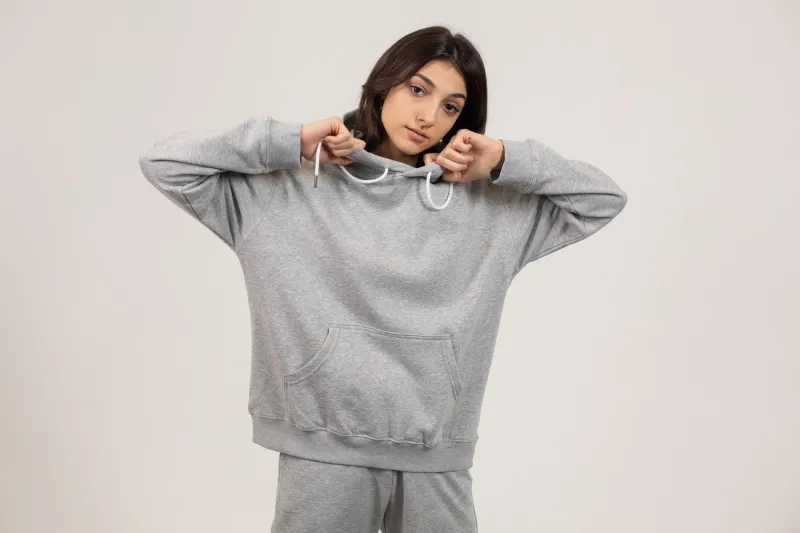
The smallest part with the biggest say
A hoodie can get a lot right — good weight, tidy seams, a hood that actually stands up — and still feel slightly unfinished if the drawstring lets it down. It is the detail your hand finds before you have even looked in the mirror. It is also the bit that most of us ignore until it disappears into the channel with a soft, unrecoverable slither.
That is the strange power of the humble cord. It is not a feature you list when recommending a hoodie to a friend, yet it changes how the garment hangs, how it behaves in wind and rain, and how quickly it can go from looking considered to looking like a spare part. In 2026, with so much attention on fabric weight and silhouette, the drawstring remains the quiet handshake between you and the hoodie. Worth learning its language.
From practical kit to pavement punctuation
Drawcords did not begin life as a style statement. They belong to the long history of practical clothing: things that needed to be tightened, secured and adjusted without fiddly buttons. Hooded sweatshirts inherited that logic. A cord let you cinch the hood against weather, keep it in place while moving, and loosen it again when you stepped indoors.
As sportswear drifted onto the street, the cord came with it. By the time hoodies became everyday wear rather than gym kit, that dangling string had acquired a second job. It could be left loose for a relaxed look, knotted for a makeshift bit of personality, or removed altogether for a cleaner line. The drawstring became one of the few parts of a hoodie you could personalise without cutting, dyeing or altering the fit. In Britain, where the weather gives you a fresh reason to adjust your hood roughly every ninety minutes, that practicality never really went away.
Flat, round and the feel of quality
Most hoodies use one of two cord types. Flat drawstrings are woven, usually with a slight width and a softer hand. They sit neatly against the fabric and tend to look a little more refined, especially on clean, understated hoodies. They also lie flatter under a jacket and are less likely to leave an odd ridge against your chest.
Round cords are the classic sweatshirt option: tubular, slightly springy and often more durable in the channel. They read as sportier and more utilitarian, which suits heavier hoodies and looser fits. The trade-off is that a round cord can feel bulkier and may swing about more when you walk. Neither is inherently better. A flat cord on a lightweight hoodie can feel flimsy; a chunky round cord on a slim, tailored hoodie can look like a shoelace that wandered into the wrong room.
The real tell is how the cord feels in the hand. A good one has some substance without stiffness. It should not fray the moment you look at it, and it should not feel like a piece of string borrowed from a parcel.
Aglets and eyelets: the small metal tells
The ends of the drawstring — the aglets — are where budget often shows. Plastic tips are common and perfectly functional, but they can crack, dull or slide out of their crimp over time. Metal aglets, whether crimped or moulded, tend to feel more secure and give a hoodie a subtle finish. They also add a little weight, which helps the cord hang properly instead of curling up like a dead spider.
Then there are the eyelets, the metal rings the cord passes through at the hood opening. Good eyelets are smooth inside, firmly set and free from sharp edges that chew the cord. If they look loose, uneven or feel rough when you run a finger around them, expect trouble. A hoodie does not need branded hardware to be well made, but tidy eyelets and solid aglets suggest someone thought about the bits you touch.
When the cord disappears into the channel
We have all been there. You pull one side, the other side vanishes, and suddenly you are performing surgery on a piece of clothing that was fine five seconds ago. The fix is simpler than the panic suggests.
First, do not pull harder. That only tightens the knot inside. Find the open end of the channel — usually near the hood edge or inside the neckline — and work the cord back through with a blunt tool. A safety pin fastened to the end of the cord is the classic method: feed the pin through the channel, scrunch the fabric along it, and guide it out the other side. A long cable tie or a piece of stiff wire can do the same job.
If the cord has fully retreated, attach a fresh length of thin wire or strong thread to a safety pin, thread that through the channel, then use it to pull the drawstring back. Go slowly. Rushing is how you end up with a hole in the lining and a new vocabulary.
Replacing a cord without drama
Sometimes the cord is beyond saving. Maybe the aglets have crumbled, maybe the colour has gone flat, maybe you simply want a cleaner look. Replacement is cheap and straightforward. Measure the old cord before removing it, or use a piece of string to gauge the route. Look for flat or round drawcord by the metre, ideally with metal tips already fitted. If you are cutting your own, seal the ends with a match or a lighter to stop fraying, then fit metal aglets with pliers if you want a more finished result.
Match the cord width to the eyelets. Too thick and it will fight you; too thin and it will look apologetic. And before you commit, check the colour in daylight. A black cord on a charcoal hoodie can look sharp; a black cord on a faded black hoodie can look like a repair.
Four ways to wear it
Loose is the default and usually the best. Let both ends hang evenly, trim them if they are excessively long, and resist the urge to over-style. A relaxed cord suits the low-key mood of an essential hoodie.
Looped means tying the ends once, loosely, so they sit close to the chest. This is useful in wind, keeps the cords out of your coffee, and adds a bit of texture without shouting.
Tucked is the cleanest option: feed the cords back through the eyelets or tuck them inside the hood. It gives a streamlined front and works well under a coat. Just remember where you put them.
Trimmed is for when the original cords are too long and keep dipping into your pockets. Cut a little at a time, seal the ends, and refit the aglets if you have them. Short cords can look deliberate and tidy, but go too short and you lose the ability to adjust the hood.
A final tug
The drawstring is not the reason to buy a hoodie, but it is often the reason a hoodie feels finished. Check the cord, the aglets and the eyelets the next time you are handling one in a shop. Then give it a tug. If it feels solid, slides smoothly and hangs with a bit of weight, the chances are the rest of the hoodie has been made with similar care. Small detail, quiet confidence — which is rather the point.